

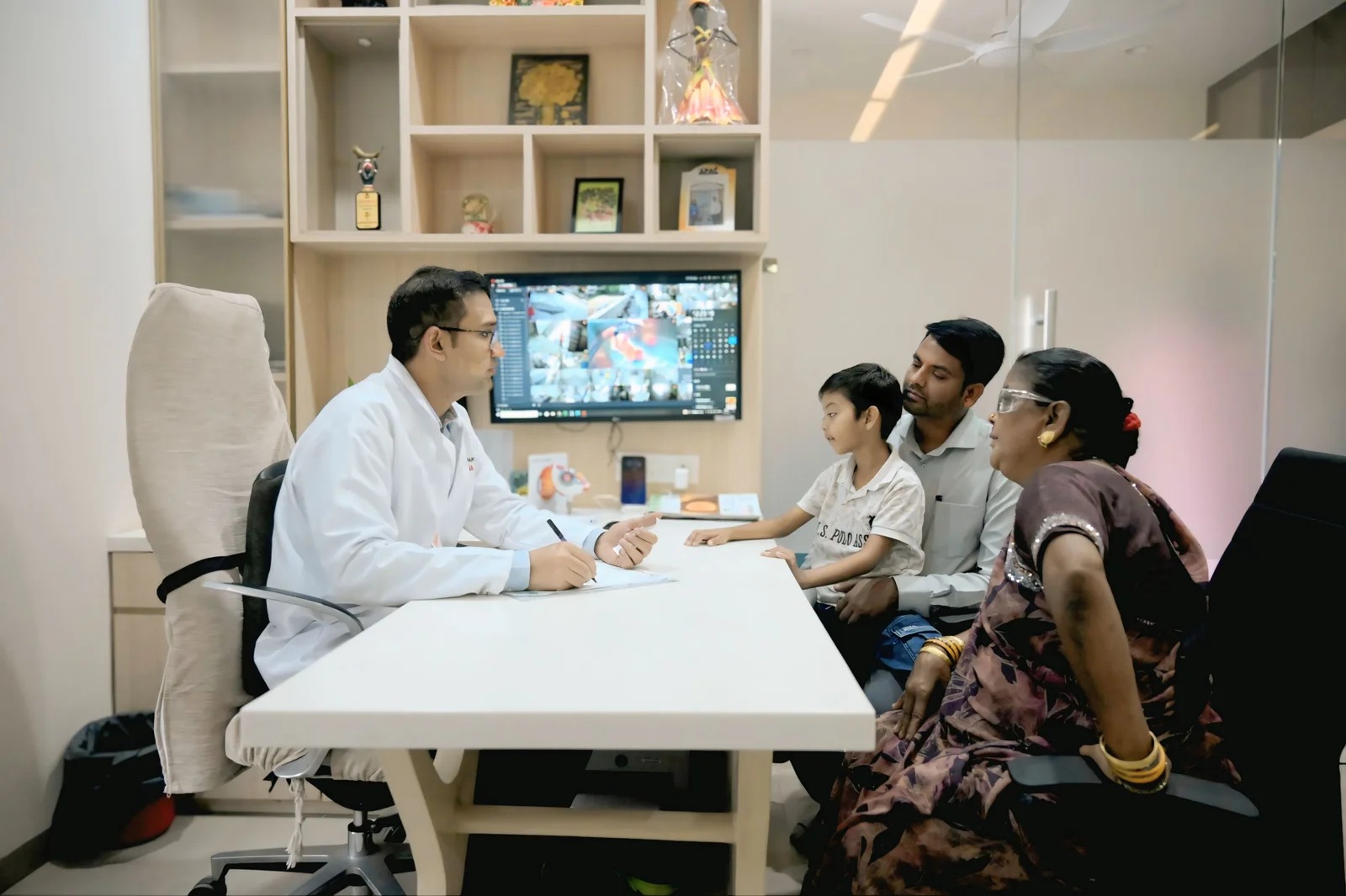

Eyelid surgery may be discussed for a drooping lid, excess skin affecting the field of vision, an eyelid turning inward or outward, a lesion or a tear-drainage concern. The safest plan begins with an examination of eyelid position, movement, the eye surface and the reason symptoms are occurring. Confirm current services through the oculoplasty and eyelid surgery hub.
Why eyelids matter to eye health
Eyelids spread the tear film across the eye, help protect its surface and close during blinking and sleep. A change in lid height, direction or closure can cause irritation, watering, dryness, exposure or a blocked upper field of vision. Some changes are temporary; others may relate to age, injury, previous surgery, muscle function, inflammation or a growth.
A drooping upper lid may reflect true ptosis, excess skin, brow position or a combination. A turned-in lid can rub lashes on the eye, while an outward-turning lid may interfere with closure and tear drainage. These conditions have different causes; a photo or online description cannot establish a diagnosis or select an operation.
Eyelid concerns that may need specialist review
Drooping eyelid (ptosis)
Ptosis describes a low upper eyelid margin. Assessment may include lid measurements, pupil and eye-movement checks, earlier photographs and visual-field testing when needed. Sudden drooping with double vision, severe headache, weakness or unequal pupils needs urgent evaluation, not a routine cosmetic appointment. Read the oculoplasty specialist guide for questions to ask.
Excess upper-lid skin
Loose skin can rest on the lashes or contribute to a heavy sensation and reduced upper field. A clinician checks whether excess skin, ptosis, brow position or another condition is responsible. Blepharoplasty may be discussed for selected patients, but its purpose and limits need to be explained. A cosmetic change is not the same as correcting a functional visual problem.
In-turning or out-turning lid
Entropion means a lid turns inward; ectropion means it turns outward. Lashes rubbing the cornea or a surface that remains exposed can cause pain, tearing and redness. Treatment depends on the cause and severity. Do not tape or pull the lid into position without clinical advice.
Lumps, lesions and tear-duct concerns
Some eyelid lumps are common and benign, but a persistent, recurrent, bleeding or changing lesion should be examined. Tearing can arise from surface irritation, lid position or drainage problems. The doctor may examine the lid margin, lashes, tear film and drainage pathway before discussing care.
Assessment before an operation
A consultation may include visual acuity and a history of the eyelid concern. The doctor may examine eyelid height, skin, blink, closure, tear film, corneal surface, pupils and eye movement. If the lid appears to block vision, field testing or measurements may be considered. Tests depend on symptoms and suspected cause; not everyone needs imaging or the same investigations.
Bring a list of medicines and allergies, especially blood-thinning medicines, eye drops and supplements. Do not stop any prescribed medicine on your own. Bring prior operative notes if you have had eyelid, cataract, refractive or facial surgery. Note when symptoms are worst and whether they change with fatigue or activity.
Medical or cosmetic eyelid surgery?
Eyelid surgery may be medical when drooping blocks vision, a lid turns inward or outward, a lump needs assessment, or an injury affects function. It may be cosmetic when the goal is to address excess skin or under-eye bags. Some people have overlapping concerns. The consultation should explain which goal applies, the alternatives and what the operation cannot change.
Before consenting, ask what diagnosis is being treated, the exact procedure, whether the aim is comfort, protection, visual function or appearance, and whether the operation could affect blink, closure, dryness, symmetry or vision. A patient is not required to proceed simply because they attended a consultation.
Which eyelid procedure may be considered?
The operation depends on the structure involved. Ptosis repair adjusts the eyelid-lifting mechanism; blepharoplasty removes or repositions tissue in selected cases; entropion or ectropion repair changes lid support or position; lesion management depends on appearance and diagnosis; tear-duct procedures address drainage. These are broad categories, not a recommendation for an individual.
Some patients need non-surgical care first, such as treatment for surface irritation or inflammation, lubricating drops, warm compresses or observation. Ask whether a lesion needs testing, where a procedure would take place, what anaesthesia is planned and whether you will need someone to accompany you home.
Recovery instructions are specific to your operation
Aftercare may include compresses, ointment or drops, head elevation, activity restrictions and review visits. The surgeon should provide written instructions for each medicine and explain when to stop it. Avoid rubbing and keep the area clean as directed. Bruising, swelling, temporary watering or tightness can occur after some procedures; the timing varies with the operation and individual healing.
Contact the clinic if symptoms worsen or instructions are unclear. Severe pain, sudden reduced vision, increasing redness, fever, pus-like discharge, new double vision or inability to close the eye needs prompt medical advice. Attend follow-up even if the eye feels comfortable; do not remove sutures or change dressings unless the clinical team instructs you.
Eyelid surgery cost in Raipur
Cost depends on the diagnosis, procedure, anaesthesia, facility and follow-up. The ranges in the working content brief have not been confirmed by the clinic, so no numeric estimate is published here. Ask for a written estimate that states what is included and which services may be billed separately.
Questions to ask an eyelid specialist in Raipur
- Is this ptosis, excess skin, a lid-turning problem, a lesion or another condition?
- Is the concern affecting vision, eye protection, comfort or appearance?
- What non-surgical options are reasonable, and what may happen if I wait?
- What operation is proposed, and what result is realistic for my eye?
- Could this affect closure, dryness, symmetry, sensation or vision?
- How many visits are expected, and what warning signs should prompt a call?
- What costs are included in the written estimate?
Plan a visit to Shree Retina Care
Call to verify current oculoplasty availability, the appropriate doctor and appointment details. Clinic address: TV Tower Road, above Haldiram, opposite Rajiv Bhawan, Shankar Nagar, Raipur, Chhattisgarh 492007.
Eyelid surgery FAQs
Is eyelid surgery always cosmetic?
No. Some procedures address function, eye protection or a medical condition; others are cosmetic or combine goals. The examination should identify the concern and explain the purpose of the proposed operation.
Does a drooping eyelid always need surgery?
No. The cause, severity, effect on vision, timing and overall eye health matter. A sudden droop with double vision, unequal pupils, severe headache or weakness needs urgent assessment.
How long does recovery take after eyelid surgery?
Recovery differs by procedure and individual healing. Ask the surgeon for a written timeline for medicines, activity, work, driving and follow-up; do not use another patient's schedule.
Can eyelid surgery cause dry eye?
Changes in lid position or closure can affect the eye surface in some patients. A preoperative assessment should consider tears, blinking and closure, and the surgeon should discuss personal risks.
How much does eyelid surgery cost in Raipur?
The cost depends on the diagnosis and operation. The clinic's current prices have not been confirmed here; request a written, itemised estimate after assessment.
Does Shree Retina Care offer every type of eyelid procedure?
The public page does not confirm that every procedure is available on every date. Call to verify the doctor, service and location before booking.
Understand the options before deciding
Ask the clinician to explain the diagnosis, alternatives, risks and recovery in language you understand. Call the clinic to confirm availability before travelling.
