





Children’s eye-area care
Oculoplasty care for children in Raipur understand the concern, ask what comes next
A child’s persistent tearing, drooping eyelid or change around the eye can leave a family with more questions than answers. Shree Retina Care’s published service information lists evaluation and management of pediatric nasolacrimal duct obstruction, ptosis and hemangioma in children. This guide explains those terms, what an assessment may clarify, and how to ask about options—without assuming a diagnosis or promising a particular procedure.
Shree Retina Care · Shankar Nagar, Raipur
Ask the clinic about an assessment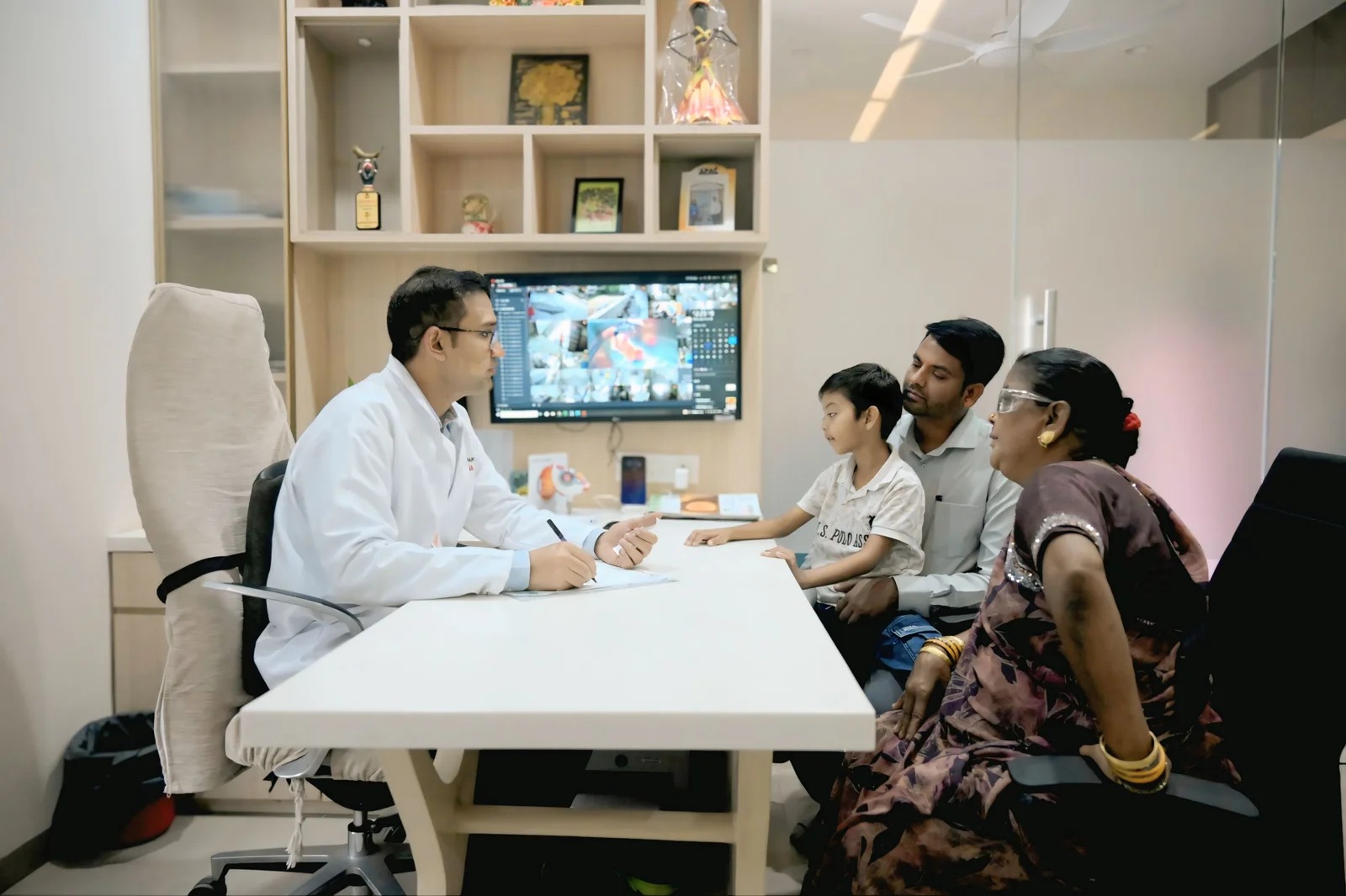
A patient guide · Pediatric oculoplasty
A clear explanation is more useful than a “best” label.
What “oculoplasty” means—and what it does not promise
Oculoplasty is a broad area of eye care involving structures around the eye, including eyelids, tear drainage pathways and tissues within the orbit. The word alone does not tell a family which services a particular clinic offers, who will provide them, or whether a procedure is suitable for a child.
Shree Retina Care’s published scope here is specifically pediatric: nasolacrimal duct obstruction, ptosis (with frontalis sling surgery listed), and hemangioma in children. This is a starting point, not a list of every possible oculoplastic service or a confirmation of appointment availability. Contact the clinic to confirm arrangements.
Tearing and pediatric nasolacrimal duct obstruction
Tears normally drain through small openings near the nose into a passage. In some babies and children, part of that passage may not be fully open, a condition called nasolacrimal duct obstruction. Watery eyes, tears on the cheek, discharge or crusting can occur. These signs do not diagnose a blocked duct: irritation, infection and other conditions can also cause watering.
Tell the clinician when tearing started, whether one or both eyes are involved, and whether redness, swelling or discharge is present. Ask what the examination shows, whether follow-up is needed and what signs should prompt earlier review. Do not start medicines or home treatment based on a web page; care depends on the child’s findings.
Ptosis: when an upper eyelid sits lower
Ptosis describes a drooping upper eyelid. It may be present from birth or become noticeable later. In a child, the clinician considers more than appearance: the position of the lid, how it moves, the child’s visual development and whether the lid interferes with the line of sight are relevant questions. The reason and significance cannot be judged reliably from a photograph alone, and families should not assume that every drooping eyelid requires surgery.
The clinic’s published page lists ptosis and frontalis sling surgery. That statement describes a listed option, not a recommendation for every child or a promise of a result. Ask the clinician to explain the examination findings, the purpose of any proposed management, timing, alternatives, risks and follow-up. If a procedure is discussed, request an explanation in language you understand and take time to consider the plan. Individual decisions belong with the treating eye-care clinician and family.
Hemangioma around the eye in a child
A hemangioma is a growth involving blood vessels. When one appears in or around a child’s eye area, its location, size, change over time and relationship to nearby structures can matter. Some are noticed as a visible mark or swelling; others may need closer assessment because of where they are. Appearance alone does not show whether vision is affected or what care may be appropriate.
Shree Retina Care’s published list includes hemangioma in children. It does not specify a particular treatment pathway, so the family should ask what assessment is available and whether further evaluation or coordination is advised. Bring the timeline of changes and any prior reports, if available. Avoid pressing, applying products or attempting to manage a lesion based on online advice. A clinician can explain what is known, what remains uncertain and how the next step will be decided.
What a first consultation may clarify
The visit starts with the family’s account: what changed, when it started, whether it is progressing, and how the child is behaving. The clinician may ask about health history and previous eye checks. Examination depends on the concern, the child’s age and cooperation; not every child needs the same tests.
Ask what the examination found, whether vision or development may be affected, and what would make the concern urgent. If a test or procedure is proposed, ask what question it answers, when findings will be discussed, and for written next steps.

Before the appointment
Bring observations, not a diagnosis.
A short timeline, prior reports and a few practical questions can make a conversation clearer. The clinician can interpret those details in the context of the child’s examination.
How to prepare as a family
Write down what you see in everyday terms: a wet cheek, a lid that looks lower, visible swelling, or a change over time. Note when it began and whether one or both sides are involved. A dated photograph may help show progression, but cannot replace an examination.
Bring prior eye records, referral notes and a list of medicines or relevant health conditions. Avoid repeatedly testing the child at home or using someone else’s medicine. Explain the visit simply without promising what tests or treatments will be involved.
Making sense of the clinic’s published information
The published service information names pediatric nasolacrimal duct obstruction, ptosis and hemangioma in children, with frontalis sling surgery listed under ptosis. It does not name an oculoplastic surgeon. A doctor profile does not establish who will see a child for this concern or when.
Before travelling, contact the clinic to confirm whether the assessment is arranged, who will conduct it and what records to bring. Browse services, pediatric ophthalmology and doctor profiles for context, not a guarantee of availability.
When not to wait for a routine appointment
Seek urgent assessment for sudden vision change, significant eye-area injury, rapidly worsening swelling or redness, severe pain, fever with worsening symptoms, or a child who seems acutely unwell. If unsure about urgency, contact an appropriate urgent-care service rather than waiting for an online answer. Do not delay care to gather records.
A practical appointment guide
A short consultation checklist.
What is the likely cause?
Ask what the examination suggests and whether other explanations remain possible. A symptom such as tearing or a drooping lid is a starting point for assessment, not a diagnosis on its own.
Is the child’s vision affected?
For a concern around the eye, ask whether the clinician has any concern about vision or visual development and what observations support that view. Ask whether a separate vision assessment is needed.
What options and uncertainties should we understand?
If management is discussed, ask its purpose, alternatives, risks, timing and what may happen if you wait. The answer depends on the child’s findings; there is no one plan for every family.
What changes mean we should seek help sooner?
Ask which symptoms should prompt urgent or earlier review and how to reach the care team. Sudden vision change, significant injury, severe pain or rapidly worsening swelling needs urgent attention.
Clinic information · carefully bounded
What is published, and what families still need to confirm.
Questions families often ask
Frequently asked questions
What does oculoplasty mean?
Oculoplasty is a broad area of eye care concerned with structures around the eye, such as the eyelids, tear drainage system and orbit. This general definition does not mean every oculoplastic service is available at a particular clinic. Shree Retina Care’s published list for this page names pediatric nasolacrimal duct obstruction, ptosis and hemangioma in children.
Which oculoplasty-related conditions does Shree Retina Care list?
The clinic-published page lists evaluation and management of pediatric nasolacrimal duct obstruction, ptosis (including frontalis sling surgery), and hemangioma in children. Contact the clinic to confirm whether a particular assessment or option is currently arranged.
Does a child with a watery eye always have a blocked tear duct?
No. Tearing can have more than one cause, and symptoms alone cannot establish nasolacrimal duct obstruction. An eye-care clinician can review the child's history and examine the eye to determine what may be contributing.
What is ptosis, and does every child need surgery?
Ptosis is a drooping of the upper eyelid. Its significance and management depend on the child's examination and whether vision or development may be affected. Surgery is not appropriate for every child; ask the clinician to explain the finding, options and timing for your child.
Does the clinic name an oculoplastic surgeon on this page?
No. The clinic-published service page describes the listed pediatric conditions but does not name an oculoplastic surgeon. Doctor profiles do not by themselves confirm a clinician's availability for a specific service, so contact the clinic to ask who will assess your child.
When should I seek urgent care for a child's eye-area concern?
Seek urgent medical assessment for sudden change in vision, a significant eye injury, rapidly increasing swelling or redness, severe pain, fever with worsening symptoms, or a child who seems acutely unwell. If you are unsure about urgency, contact an appropriate urgent-care service rather than waiting for routine information online.
Clear questions can make the next step feel less uncertain.
Ask what the examination found, what options are actually available for your child, and who will explain the plan. For sudden vision change, significant injury, severe pain or rapidly worsening symptoms, seek urgent care.
Further reading
These patient-education resources explain the conditions in general. They do not establish clinic services or replace an individual assessment.
