

Children’s eye care
Children’s eye care in Raipur examination, development and support
Children do not always know how to describe blurred vision, and a child can adapt to seeing poorly with one eye. Shree Retina Care’s clinic-published pediatric services include retinopathy of prematurity (ROP) screening and management, age-appropriate vision testing, cycloplegic refraction, amblyopia and squint care, and pediatric glaucoma, cataract and corneal opacity. The right assessment depends on a child’s age, development and reason for referral.
Shree Retina Care · Shankar Nagar, Raipur
Explore eye-care services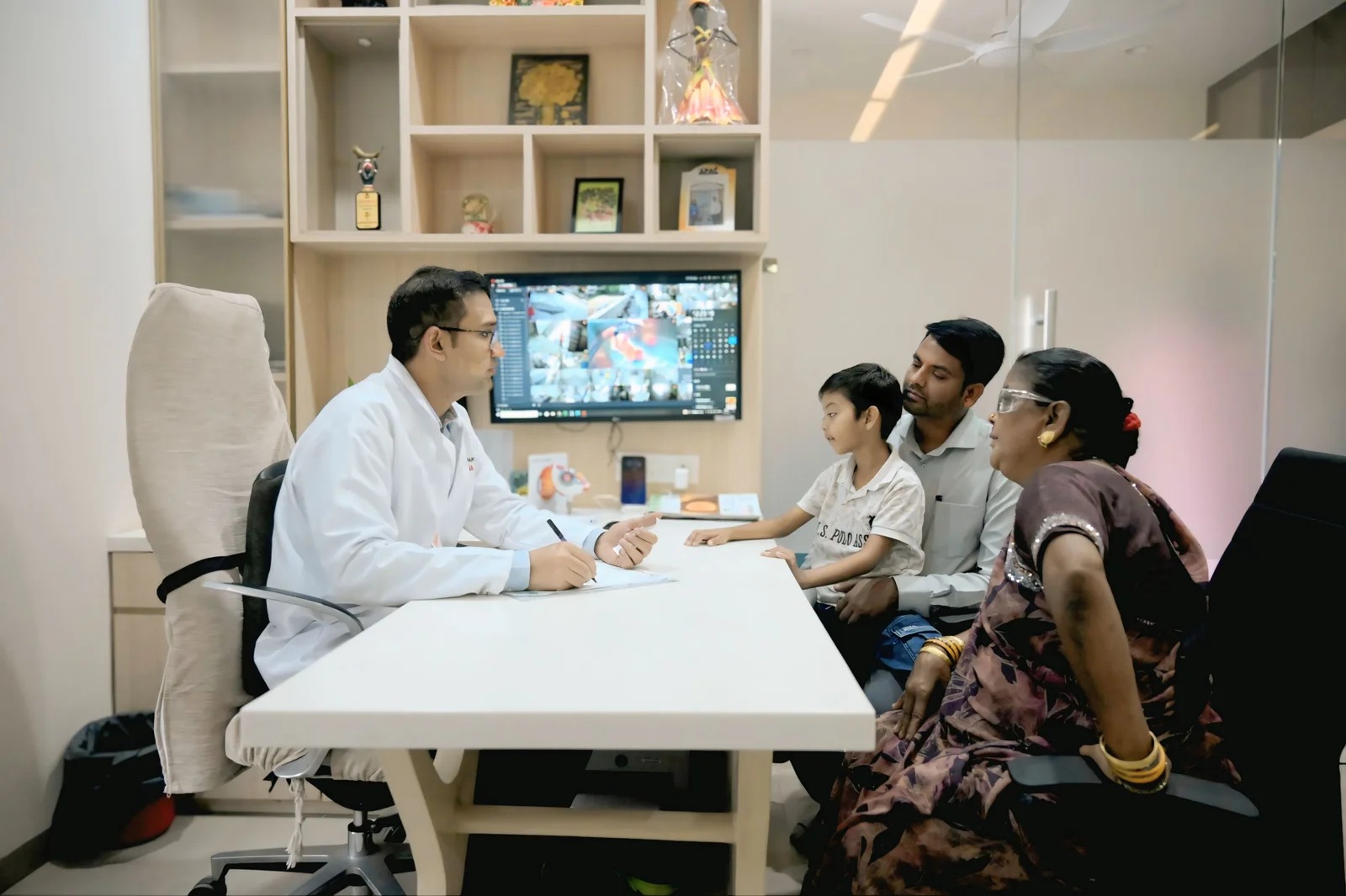
A patient guide · Pediatric ophthalmology
Make the visit work for the child’s age, history and development.
A child’s vision is still developing
Vision develops through childhood as the eyes and brain learn to work together. Children may not report blur because they assume everyone sees the same way, or because one eye compensates for the other. A concern raised by a parent, teacher or paediatrician is worth discussing. A child who bumps into things, turns the head to look, closes one eye, or avoids near tasks may need assessment, although none of these observations alone makes a diagnosis.
Screening and a full eye examination are different
Age-appropriate vision testing is different from simply asking a child to read adult-sized letters. The clinician selects methods that suit the child’s age, language, attention and ability to cooperate. A screening check can flag a possible concern, but it does not replace a complete eye examination when results are abnormal or symptoms persist. Ask what was tested, what the result means, and whether a further assessment is needed.
ROP: follow the schedule advised for your baby
Retinopathy of prematurity is an eye condition affecting some babies born prematurely, related to development of retinal blood vessels. Screening and follow-up are time-sensitive and depend on the baby’s clinical history and specialist guidance. Parents should follow the specific schedule given by the neonatal and eye-care teams; do not assume a baby needs no review because the eyes look normal. Carry discharge summaries and prior examination records to each visit.
Refraction and why drops may be used
Cycloplegic refraction uses eye drops to temporarily relax focusing effort so the clinician can measure refractive error more accurately. The drops may make near vision blurry and sensitivity to light noticeable for a period. Ask the care team what to expect and how long effects may last for your child. The result helps inform a prescription, but the need for glasses and their power are individual decisions.
Amblyopia: supporting visual development
Amblyopia, often called lazy eye, describes reduced vision in an eye that did not develop normal visual function during childhood. It can be associated with unequal refractive error, an eye turn, or another obstacle to clear vision. A child may not complain. Treatment is directed at improving visual development and can include correcting refractive error and, in selected cases, patching or other clinician-guided measures. The plan and monitoring are individual.
Squint: alignment and vision need separate attention
Squint, or strabismus, means the eyes are not aligned in the same direction. It can be constant or intermittent and may be more noticeable when a child is tired or unwell. Alignment assessment is not the same as measuring how well each eye sees. A clinician may assess both. Glasses, patching and alignment treatment have different purposes; patching may address amblyopia, while treatment of alignment is considered separately.
When a child has a less common eye condition
Pediatric glaucoma, cataract or corneal opacity can affect vision in ways that require specialist evaluation. A cloudy-looking eye, unusual light sensitivity, persistent tearing, an apparent difference between the eyes, or a change in visual behaviour merits a medical conversation. These signs are not diagnostic, and urgency depends on the specific presentation. If a child has sudden pain, injury or sudden vision change, seek urgent care.
Helping a child feel ready for an appointment
For a visit, explain to your child in simple, calm terms that the doctor will look at the eyes and may ask them to identify pictures or lights. Bring prior prescriptions, school or referral notes, and any neonatal records relevant to ROP. Avoid promising that the examination will be painless or that drops will not be needed. A familiar adult, short explanations and time for questions can make the experience more manageable.

A conversation, not a checklist
For children, preparation is part of the examination.
Bring prior prescriptions and describe what you notice during reading, play or school. A child may not recognise blur, and the clinician may use different tests depending on age and cooperation. Explain the visit simply without promising which drops or tests will be used.
Before and after the visit
Small details that make care clearer.
Why children may need more than one method
A child’s ability to participate can change with age, language, fatigue and confidence. The clinician may use picture matching, symbols, lights or other age-appropriate methods rather than a standard letter chart. An uncertain result does not always mean a problem is present, but it may justify repeating a test or arranging a fuller examination. Ask what the child could complete and what part still needs clarification.
Share observations without turning home into a test
Parents can note whether a child brings books close, turns the head, closes one eye, loses place while reading or seems uncomfortable in bright light. These behaviours can have many explanations. Avoid repeatedly covering an eye or asking the child to prove what they can see; the clinician can test each eye in a structured way. Specific everyday examples help more than a conclusion such as “the vision is weak.”
A practical conversation about glasses
If glasses are prescribed, ask when the child should wear them, how to keep them fitting comfortably and when the prescription should be reviewed. Explain the reason in positive, matter-of-fact language. A child’s visual needs may differ between classroom work, outdoor play and other tasks, and the clinician can advise whether full-time wear is intended. Do not use an older sibling’s prescription or purchase a substitute without assessment.
Coordinate with school and caregivers
When a vision issue affects classroom access, discuss practical supports with the clinician and school, such as where a child sits or whether printed material needs adjustment. Share only the information necessary to support the child. Ensure other caregivers understand any patching or drop schedule in writing. Consistency matters when treatment is prescribed, but the schedule should come from the treating team rather than an informal routine.
Follow-through for babies and young children
For infants referred for ROP screening or management, keep every visit in the advised window and confirm the next date before leaving. Babies may need continued review even when no outward sign is visible. Bring neonatal discharge information and prior eye findings. If travel or access makes the schedule difficult, contact the care team promptly to discuss options; do not decide independently that a review can be skipped.
An appointment guide · A child’s eye visit
Make the visit work for the child’s age, history and development.
Carry records that change the context
Bring previous glasses prescriptions, reports, referral notes and any school observation that describes a specific difficulty. For a baby born prematurely, include neonatal discharge information and prior ROP examinations. The dates and results help the clinician understand what was checked and whether the recommended follow-up window is approaching.
Describe behaviour without testing at home
Tell the clinician if the child turns their head, closes one eye, brings books close, avoids near work or seems sensitive to light. These behaviours have several possible explanations. Avoid repeatedly covering an eye or asking the child to prove what they can see; structured age-appropriate testing is more useful.
Ask what each test measures
Children may be tested with pictures, symbols, lights or other age-appropriate methods. Ask whether the check was a screening or a full examination, what each eye could complete and whether a repeat test is needed. An uncertain result can reflect cooperation or attention and should be explained before drawing conclusions.
Understand drops and refraction
Cycloplegic drops relax focusing so refractive error can be measured. Ask whether drops are planned, how near vision or light sensitivity may be affected, and when those effects usually wear off. If glasses are prescribed, confirm when the child should wear them and when the prescription should be reviewed.
Separate visual development from alignment
If patching is recommended, ask whether its goal is amblyopia treatment and which eye, schedule and review apply. Patching does not automatically straighten a squint. Ask separately how alignment will be assessed and which options, if any, fit the child’s examination.
Coordinate the plan among caregivers
Write down drop, glasses or patching instructions so parents and other caregivers use the same plan. Ask whether school needs a practical adjustment and what information should be shared. Keep ROP appointments within the advised schedule; if travel makes a visit difficult, contact the care team rather than skipping it.
Questions patients often bring
Frequently asked questions
When should a child have an eye examination?
Timing depends on age, development, symptoms, risk and prior screening. Follow advice from your paediatrician or eye-care clinician, and seek assessment when a concern persists even if the child does not complain.
What is cycloplegic refraction?
Eye drops temporarily relax focusing so refractive error can be measured more accurately. Near blur and light sensitivity can occur for a time. Ask the clinic what to expect for your child.
What is ROP screening for?
Retinopathy of prematurity screening checks babies at risk for changes in developing retinal blood vessels. The neonatal and eye-care teams provide a specific schedule; timely follow-up matters even when the eyes look normal.
Does patching straighten a squint?
Patching may be used to treat amblyopia by encouraging use of an eye with reduced visual development. It does not automatically straighten the eyes. Alignment care is considered separately by the clinician.
Which doctors are listed for pediatric and squint care?
Clinic profiles list Dr. Khushbu Partani and Dr. Kalyani Narote for pediatric and squint care. Contact the clinic to confirm current availability.
How can I help my child prepare?
Explain the visit simply, bring prescriptions and relevant records, and share what you have noticed. Avoid promising that drops or tests will not be needed; the clinician can explain each step.
A child may need assessment even without a clear complaint.
Persistent concerns about eye alignment, reading, visual behaviour or a cloudy-looking eye deserve a clinician’s assessment. Follow the neonatal team’s schedule for ROP screening and management.
Further reading
Reliable patient information used to inform the medical explanations on this page. These links do not replace individual medical advice.
