

Retina · vitreoretinal care
Retina care in Raipur know what changes need attention
Retinal problems can affect central detail, side vision, or the way the eye responds to light. At Shree Retina Care in Shankar Nagar, Raipur, clinic-published retina information lists retinal detachment, retinal degeneration and diabetic retinopathy. The important first step is not guessing which condition fits a symptom: it is a timely eye examination and a clear explanation of what the findings mean.
Shree Retina Care · Shankar Nagar, Raipur
Explore eye-care services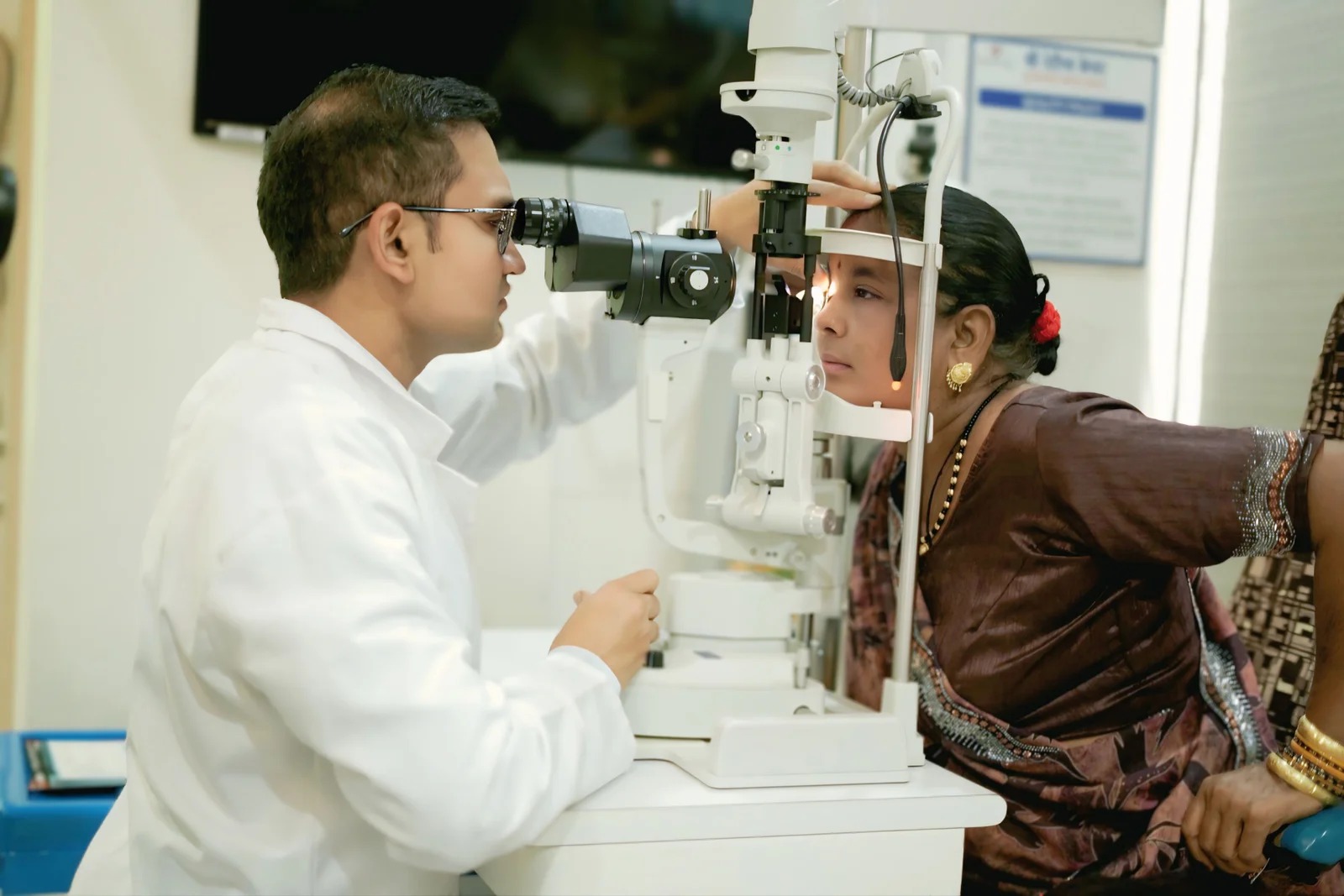
A patient guide · Retina care
Understand retinal findings and decide what needs attention.
The retina and its job
The retina is the light-sensitive tissue lining the back of the eye. It turns incoming light into signals that travel through the optic nerve to the brain. The macula, near the centre, supports fine detail and reading; other retinal areas contribute to peripheral vision. A problem in one area may therefore affect vision differently from a problem elsewhere.
Retinal disease is not one diagnosis. Some changes develop gradually and may initially be subtle; others, including a retinal tear or detachment, can progress quickly. A person may notice distortion, a missing area, dimness, flashes, or floaters, but symptoms alone cannot establish the cause. A clinician uses the history and examination to decide what evaluation is appropriate.
Retinal detachment: treat warning signs as urgent
A retinal detachment occurs when the retina separates from its supporting tissue. New flashes of light, a sudden increase in floaters, or a shadow or curtain moving across vision can be warning signs. They do not prove that detachment has occurred, but a sudden change should not wait for a routine appointment. Seek urgent eye assessment, particularly if a curtain-like loss or sudden reduction in sight is present.
The examination may involve looking at the retina after drops widen the pupil. The clinician may use additional imaging or tests depending on what can be seen and the symptoms reported. If a tear or detachment is found, the recommended next step depends on its location, extent, and the eye’s condition. Only the treating ophthalmologist can explain whether observation, a procedure, or surgery is being considered.
Diabetic retinopathy and regular review
Diabetes can affect the small blood vessels in the retina. Early diabetic retinopathy may cause no obvious change in everyday sight, so feeling well does not replace recommended retinal screening. If diabetes is part of your medical history, bring recent reports and tell the eye doctor how long you have had it, how it is being managed, and whether previous retinal checks found changes.
A dilated retinal examination is commonly used to assess the back of the eye; other tests may be chosen when needed. Follow-up timing depends on the findings and individual risk, rather than a single schedule that suits everyone. Discuss the interval in plain terms before leaving. Maintaining diabetes care with your physician is important, but it does not substitute for eye examinations or treatment when retinal disease is identified.
Degeneration and changes in central detail
Retinal degeneration is a broad term for changes affecting retinal tissue; the exact condition and course vary. A person might notice that straight lines look bent, words are harder to read, or a small central area seems blurred. Other retinal changes can affect side vision instead. A gradual change deserves assessment too, especially when it differs from the usual vision in one eye.
At the visit, describe when the change began, whether it is constant, and whether it affects one or both eyes. Mention distortion, missing areas, floaters, flashes, and any recent change in reading or face recognition. A simple way to communicate distortion is to say whether door frames or printed lines appear wavy. Do not use an online symptom list to rule out a serious retinal problem.
What an examination may involve
A retina assessment begins with your story: what changed, when it began, whether it is progressing, and what medical conditions or medicines may matter. The clinician checks vision and examines the eye. Drops to widen the pupil can make near focus blurry and light feel uncomfortable for a while, so ask about practical effects before the examination and consider bringing sunglasses.
Depending on the question being investigated, the clinician may recommend retinal photographs, scans, or other tests. These are not a checklist that every patient needs. Ask what each test is intended to clarify, whether preparation is needed, and when the result will be discussed. Bring prior eye records if available; comparisons over time can help explain whether a finding is new or has changed.
Treatment is diagnosis-specific
There is no single treatment called retina treatment. Management may involve monitoring, medical treatment, a laser-based procedure, an injection, or surgery, depending on the diagnosis and examination. This page does not imply that every service or approach is appropriate for every condition, or that any particular procedure is offered for a particular person. Ask the ophthalmologist to connect the proposed option to the finding in your eye.
Before agreeing to a procedure, ask what problem it is intended to address, what alternatives exist, what may happen if you wait, and what risks matter in your circumstances. Clarify the expected recovery instructions and how follow-up will be arranged. If the explanation feels too fast, it is reasonable to ask for it again in simpler language or to bring a family member to help remember the discussion.
Living with a retinal diagnosis
A retinal diagnosis can feel alarming because the retina is not visible in ordinary daily life. Ask for the name of the condition and whether it is affecting central vision, peripheral vision, or both. Find out which symptoms mean you should seek urgent help and which changes should be recorded for your next review. Written instructions can make a complex plan easier to follow at home.
If vision is reduced, practical adjustments may help while you are being assessed: improve lighting, enlarge text, use high contrast, and avoid driving if sight is not adequate or a clinician advises against it. These steps do not treat the retina. Tell the care team which daily tasks are difficult so the conversation can include safety, work, reading and support rather than test results alone.
Choosing a retina consultation in Raipur
For a first visit, carry your glasses, medication list, diabetes records if relevant, and earlier reports or scans. Note the onset of symptoms and any previous eye procedures. If sudden changes are occurring, do not delay urgent assessment while gathering paperwork. Shree Retina Care is located in Shankar Nagar, Raipur; clinic-published profiles list Dr. Anand Partani (M.S., FLVPEI, FICO (UK), FVR (Italy)) and Dr. Akash Patel (MBBS, DNB (Ophthal), FVRS) in vitreoretinal care.
A profile listing does not confirm a particular doctor’s schedule or immediate availability. Contact the clinic to confirm practical details before travelling, especially when you need a specific clinician. For broader eye-care options, browse all services, review the doctor profiles, or read about glaucoma care and uvea inflammation.
A calm plan for the next step
When an eye symptom appears, people often compare one eye with the other, search online, and wait to see whether it settles. A short record can be useful, but it cannot replace examination. Write down the time it began, the kind of change, and any associated pain, flashes, new floaters or shadow. If sight has suddenly dropped or a curtain has appeared, treat it as urgent rather than monitoring at home.
At the end of a visit, make sure you know the working diagnosis, whether it is confirmed or still being investigated, and what happens next. Ask when to return, what would bring the appointment forward, and whom to contact if symptoms change. A good plan is specific enough to guide you without promising a result that no clinician can guarantee.

A conversation, not a checklist
A retinal plan should name the finding and next step.
Ask whether the concern is a tear, detachment, diabetic change or another retinal finding. A useful discussion connects the examination to the proposed action, explains urgency, and tells you which new symptoms should bring you back sooner.
Before and after the visit
Small details that make care clearer.
An appointment guide · Retinal assessment
Prepare for a retina assessment with the right details.
Bring a symptom timeline
Write down whether the change began suddenly or gradually, which eye is affected, and whether flashes, floaters, distortion or a shadow are present. A curtain or sudden vision drop is urgent; do not postpone care to collect old reports. Bring previous retinal scans if already available.
Diabetes belongs in the history
Tell the ophthalmologist how long you have had diabetes, any prior retinal findings and the date of your last eye check. Early diabetic retinal change may not alter everyday sight, so follow the interval advised for your own findings rather than waiting for blur.
Ask what the examination found
Clarify whether the retina was fully visible, which area is affected and whether a finding is new or stable. If imaging is suggested, ask what question it answers and when the result will be reviewed. A scan is useful when it informs a decision, not as a stand-alone label.
Clarify urgency and treatment purpose
If a procedure, injection, laser or observation is discussed, ask what diagnosis it addresses, why that option fits, what alternatives exist and what could happen if you wait. Not every retina condition needs the same treatment. Ask which symptom means immediate reassessment.
Plan around dilation and vision
Drops may widen the pupil and temporarily affect near focus or increase light sensitivity. Ask what to expect and whether you should arrange transport. If sight is reduced, avoid driving or hazardous tasks until you can see safely; sunglasses may help with glare after dilation.
Keep follow-up specific
Before leaving, note the recommended review date, what it is monitoring and who to contact if the symptom changes. Retina conditions can have different follow-up needs. If you have diabetes, keep eye review coordinated with your broader diabetes care, but do not treat one as a substitute for the other.
Questions patients often bring
Frequently asked questions
What symptoms can indicate a retinal emergency?
New flashes, a sudden burst of floaters, a curtain or shadow, or sudden loss of vision need urgent eye assessment. These symptoms can have different causes, but should not be dismissed or left for a routine review.
Does diabetic retinopathy always affect vision early?
No. Retinal changes related to diabetes can exist before a person notices a change in everyday vision. Follow screening advice from your eye-care clinician and share diabetes history at the examination.
Will every retina visit include a scan?
Not necessarily. The tests depend on symptoms and examination findings. Ask what a proposed image or scan is meant to clarify and when the clinician will explain the result.
Can retinal degeneration be cured?
“Retinal degeneration” describes a range of conditions, not one disease with one treatment. The outlook and appropriate care depend on the specific diagnosis, so an individual examination is needed.
Who is listed for vitreoretinal care at Shree Retina Care?
Clinic-published doctor profiles list Dr. Anand Partani and Dr. Akash Patel in vitreoretinal care. A profile does not confirm availability; contact the clinic to check current arrangements.
What should I bring to a retina appointment?
Bring glasses, a medicines list, relevant diabetes information, prior eye records and scans if available. Note when symptoms started and whether they are changing. Do not delay urgent assessment to collect records.
Sudden retinal symptoms need timely assessment.
New flashes, a burst of floaters, a curtain or sudden vision loss should not wait for a routine retina visit. Explore the clinic’s service and doctor information, and seek urgent assessment when these warning signs occur.
Further reading
Reliable patient information used to inform the medical explanations on this page. These links do not replace individual medical advice.