Eye Specialist in Shankar Nagar, Raipur | Shree Retina Care
Eye care · Shankar Nagar

Eye specialist in Shankar Nagar, Raipur

Finding an eye specialist close to home is only one part of choosing care. Patients also need to know which doctor should assess their concern, what records to bring, how to book and where to go if symptoms become urgent. This page gives practical, location-specific information for visiting Shree Retina Care in Shankar Nagar.

The clinic’s public website lists ophthalmology services and doctor profiles. A profile does not confirm a doctor’s schedule on a particular date, so call before travelling and describe the reason for your visit.

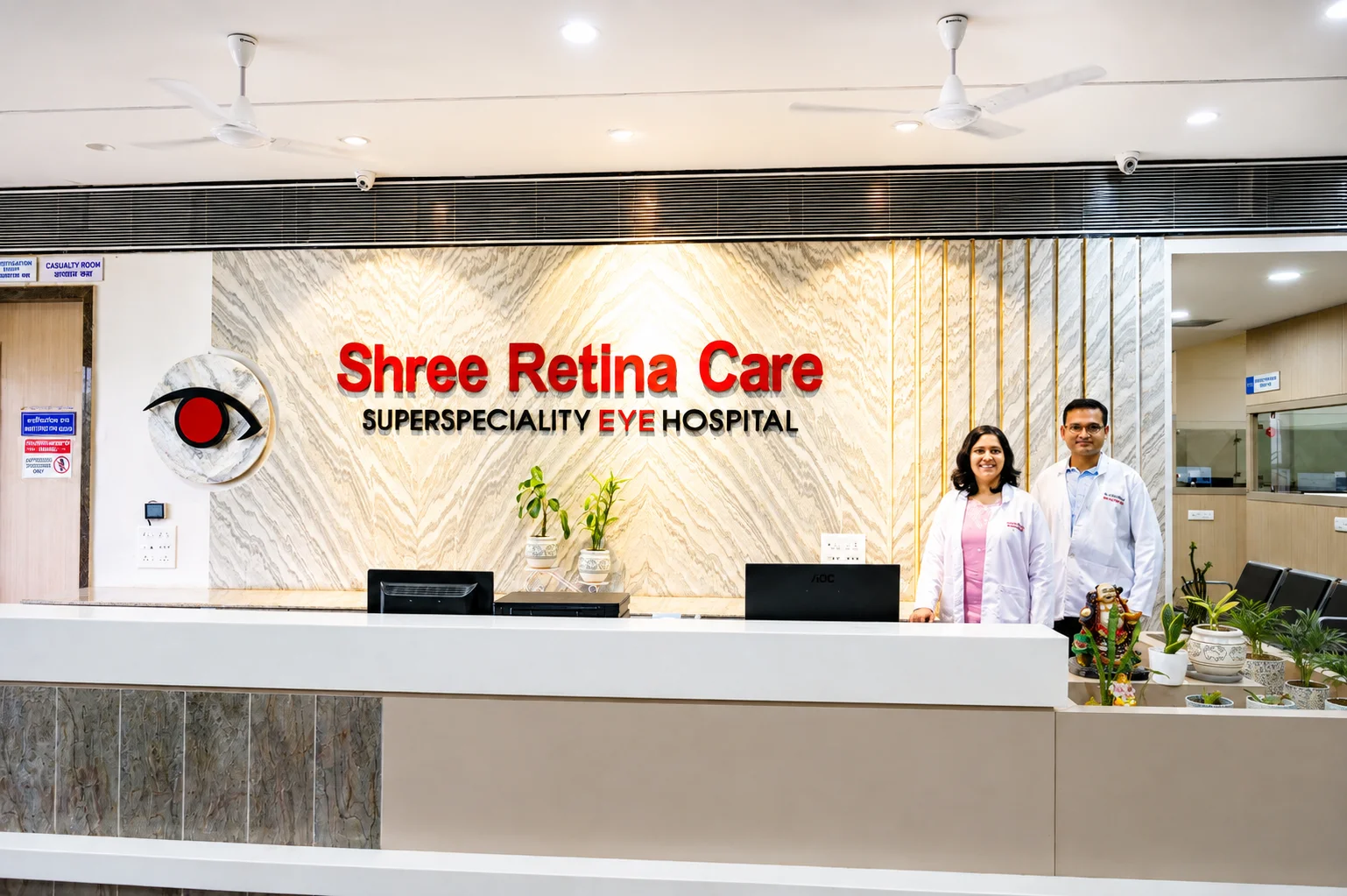
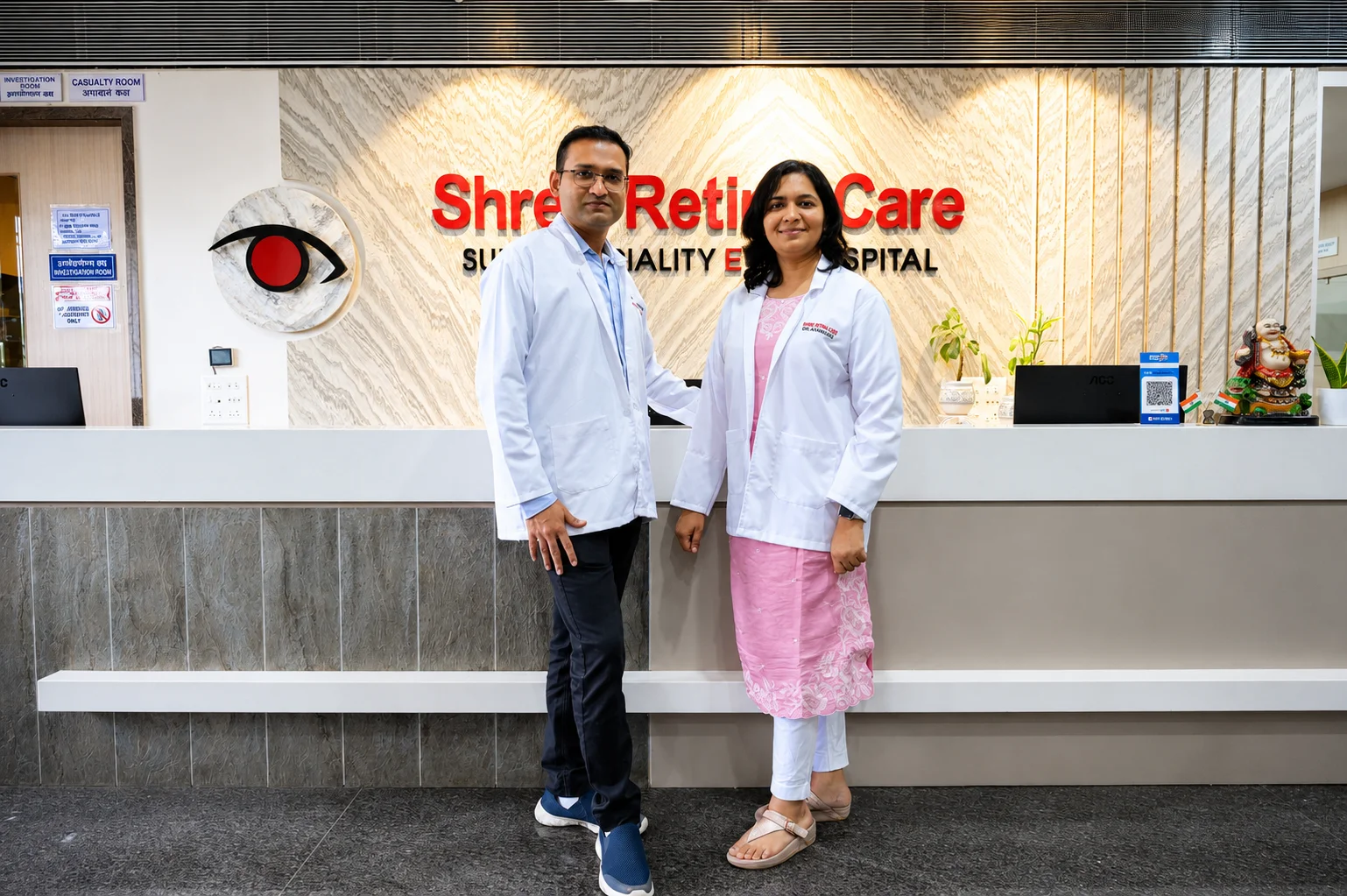
Reception area at Shree Retina Care, Shankar Nagar, Raipur
Clinic location

Shree Retina Care in Shankar Nagar

The clinic’s published address is TV Tower Road, above Haldiram, opposite Rajiv Bhawan, Shankar Nagar, Raipur, Chhattisgarh 492007. These local landmarks can help visitors identify the area, but road access, traffic, entry arrangements and map pins can change. Before leaving, check the clinic’s current contact page or call to confirm the address, the entrance to use and the appointment time.

For appointments, the public website lists +91 78980 83460. It lists +91 93017 70138 for OPD enquiries and +91 77149 03429 as another contact number. Call to verify which number is best for your concern and whether the relevant doctor is available. If you are coming from outside Raipur, confirm the day’s schedule before booking travel.

Use the clinic’s map or a trusted navigation service and confirm the destination name before starting. If a family member is arranging transport, share the clinic’s official address rather than a shortened link from an unknown source. Plan extra time for parking, registration and any tests. If the appointment includes dilation or another test that can temporarily affect vision, ask whether you should bring someone to accompany you.

A clinic visit should not be delayed for a routine appointment if symptoms are severe. Sudden vision loss, a painful red eye, a new injury, flashes with a curtain-like shadow or sudden double vision can need prompt assessment. Call a medical service for urgent instructions and do not drive yourself if vision is impaired.

Choose the right consultation

Different eye concerns may need different specialists

Ophthalmologists assess eye health and vision, while subspecialty training can focus on areas such as retina, cornea, glaucoma, children’s eye care, uvea, squint or oculoplasty. The right appointment depends on symptoms, previous findings and the clinic’s current schedule. A receptionist can help route an enquiry, but only a clinician can determine the diagnosis and treatment.

Blurred or changing vision

Blur may relate to glasses power, cataract, cornea, retina, optic nerve or general health. Bring current and earlier prescriptions, note when the change began and tell the doctor whether one or both eyes are affected. Sudden loss or a rapid change should be assessed urgently.

Diabetes and retinal checks

People with diabetes may need eye examinations even when vision seems normal. Bring recent diabetes information and any retinal photographs or reports. The doctor can advise an appropriate review interval based on the examination and medical history.

Childhood eye concerns

Squint, a suspected lazy eye, reading difficulty, eye rubbing or a change in a child’s visual behaviour may need assessment. Bring school or paediatric reports when relevant and explain how the concern affects learning and daily activities.

Pain, redness or injury

A painful red eye, chemical splash, foreign body or sudden injury may need urgent attention. Do not put unprescribed drops or home remedies in the eye. If a chemical enters the eye, follow emergency first-aid advice and seek immediate medical care.

Prepare for the visit

What to bring to an eye-specialist appointment

A little preparation can make the consultation more useful. Bring your glasses, current eye drops, a written medicine and allergy list, previous prescriptions, scan reports, operative notes and hospital discharge summaries. If you have diabetes, hypertension or another condition that affects treatment, carry recent records if available. Do not stop any prescribed medicine simply because you have an eye appointment.

Write down the symptoms in your own words: when they started, whether they are worsening, which eye is affected, what makes them better or worse and how they affect work, driving, reading or sleep. Mention flashes, floaters, distortion, double vision, pain, light sensitivity or discharge. A symptom list can help ensure that time-sensitive details are not forgotten.

For a child, bring the parent or guardian, glasses, school observations and previous assessments. For a patient with limited mobility or poor vision, arrange an accompanying person if needed. Ask whether dilation, imaging or another test may affect driving or require extra time. The clinic can confirm practical preparation for the specific appointment.

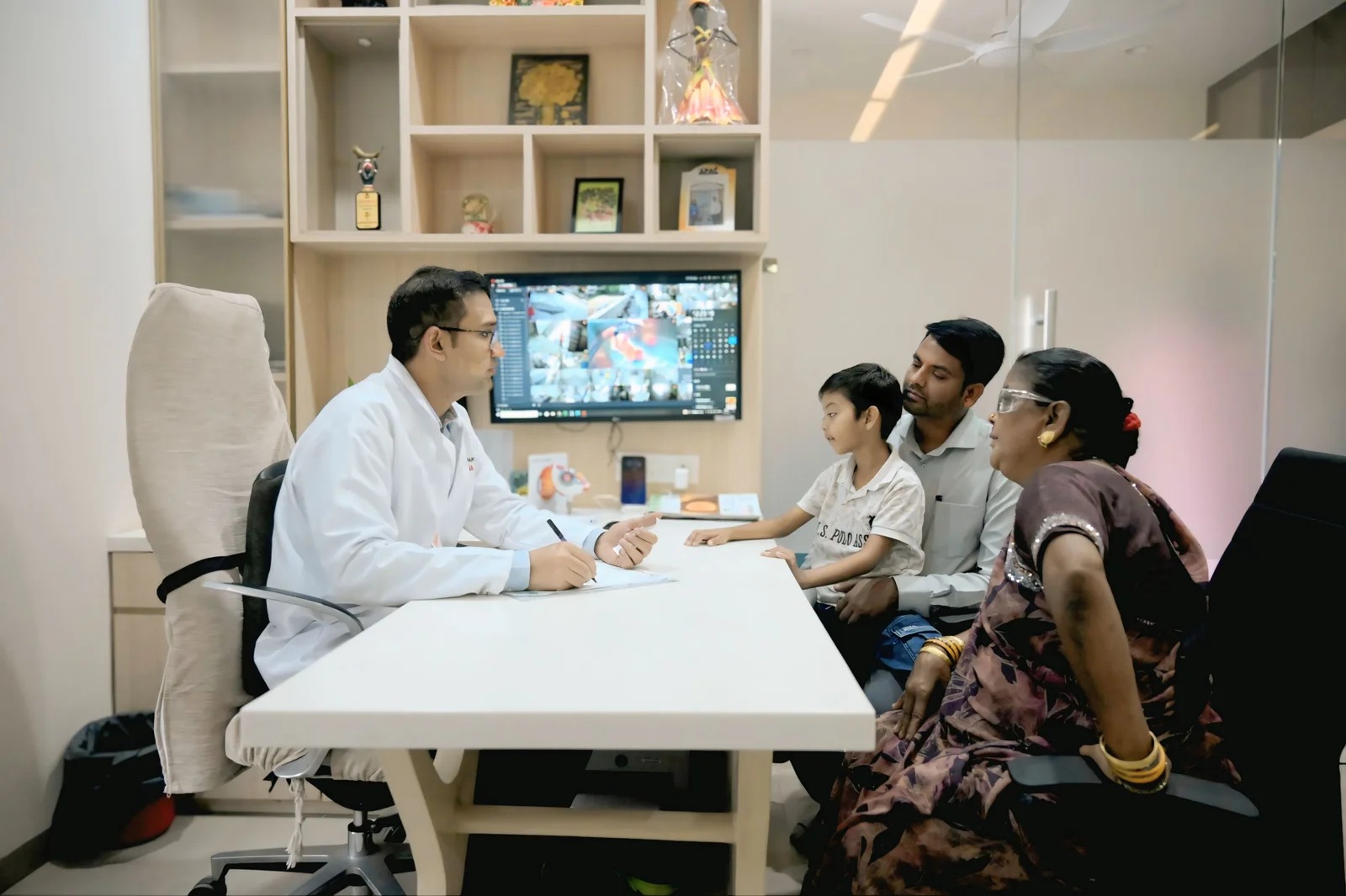
Family speaking with a clinician during an eye-care visitClinic reception team available to guide visitors

At registration, confirm the doctor’s name and specialty, the expected consultation fee and whether tests are separate. If you have insurance or a government scheme, ask the clinic to verify the current network and package status before treatment; do not assume a logo or old list guarantees coverage. Request an estimate and written instructions when a procedure is discussed.

How to evaluate care

Questions that help you make an informed decision

Patients may compare clinics based on location, doctor experience, available tests, communication, appointment timing and cost. A search phrase such as “best eye specialist” does not prove a clinical outcome. Look for clear credentials, an explanation of the diagnosis, a chance to ask questions and a written plan. If a recommendation is unclear or a major procedure is proposed, asking for a second opinion can be reasonable.

  1. Which doctor will see me, and what is their relevant specialty?
  2. What tests are needed today, and how will the results affect the plan?
  3. Is the condition urgent, or can I safely schedule a follow-up?
  4. What treatment choices exist, including observation or glasses where suitable?
  5. What are the likely benefits, risks and limitations of each option?
  6. Which symptoms should make me contact the clinic sooner?
  7. What are the consultation, testing and treatment charges, and what is included?

Ask for the doctor’s explanation in language you understand. If you do not understand a medical term, ask the team to explain it again. Keep a copy of the diagnosis, test results and follow-up advice. This makes it easier to continue care if you travel or consult another specialist.

Shree Retina Care’s public website has a doctor-profile page and lists multiple eye-care services. Check the current profiles directly and confirm availability by phone. The appropriate specialist may depend on the specific problem, and the clinic may advise an initial comprehensive assessment before routing you further.

Accessibility and follow-up

Planning after the first consultation

Before you leave, confirm the next step: a repeat test, a follow-up date, a procedure discussion or a prescription review. Ask how you will receive reports and whether they can be shared electronically. Keep the contact number and appointment details in a place the patient or caregiver can find easily.

If eye drops are prescribed, ask the name, dose, frequency, duration, storage instructions and what to do if a dose is missed. Ask whether the drops can blur vision or affect other medicines. Do not use someone else’s drops, extend a course or stop medication without medical advice. If the bottle label differs from the written instruction, contact the clinic or pharmacist before using it.

When a procedure is recommended, request a separate discussion of consent, preparation, risks, recovery, transport and costs. Make sure the estimate identifies the procedure, eye, surgeon or facility charges, tests, medicines and follow-up. If a government scheme or insurer is involved, confirm approval in writing before elective treatment.

Visitors from nearby towns can call ahead to coordinate consultation and testing on the same day, but the clinic must confirm whether that is possible. Do not travel expecting a procedure based only on a phone enquiry. Treatment decisions may change after examination or test results.

This page is an informational location guide. It does not rank doctors, guarantee wait times or claim a particular clinical result. Medical advice should come from the ophthalmologist who examines the patient.

Before you arrive

Appointments, access and communication

When you call, mention whether this is a first visit, a review, a surgery discussion or a time-sensitive symptom. Ask which doctor is appropriate, how long the visit may take and whether tests can be scheduled on the same day. If the patient has difficulty walking, hearing or communicating, tell the reception team so they can advise on practical arrangements. Confirm whether a caregiver may accompany the patient during registration and consultation.

If you are coming by car or public transport, ask about the nearest entrance and local traffic conditions. Shankar Nagar is a busy area and the clinic may have limited waiting or parking space at certain times. The website’s address and map link should be checked before departure. Keep the appointment phone number available in case you need directions or your travel time changes.

Patients who have limited English proficiency can ask whether a family member may help explain history and instructions. For medical consent, ensure the patient understands the procedure and can ask questions in a language they are comfortable using. Do not rely only on a family member’s interpretation if the patient can communicate directly with the doctor.

Ask how reports are delivered and whether you should bring printed copies to a follow-up. If the clinic uses digital records, confirm the contact method and check that the phone number or email on file is correct. Keep personal medical reports private; do not upload them to an unverified social media account or send them to a number that has not been confirmed by the clinic.

If you have to reschedule, call as early as possible and ask whether a new time is available with the same doctor. Do not assume that a doctor’s profile means a particular doctor is present every day. Confirm the schedule and the purpose of the appointment before making a long journey.

Visitor questions

Eye specialist in Shankar Nagar FAQs

Where is Shree Retina Care located?

The clinic’s published address is TV Tower Road, above Haldiram, opposite Rajiv Bhawan, Shankar Nagar, Raipur, Chhattisgarh 492007. Confirm the current map pin and entrance by calling before you travel.

How do I book an appointment?

The public website lists +91 78980 83460 for appointment enquiries and +91 93017 70138 for OPD. Call to confirm the current number, doctor availability, timing and any preparation instructions.

Which eye specialist should I see?

It depends on the concern and prior findings. Describe your symptoms to the clinic and ask which doctor or service is appropriate. Severe or sudden symptoms need prompt assessment, not routine appointment routing.

What should I bring?

Bring glasses, current medicines and drops, allergies, earlier prescriptions, test reports, operation notes and relevant general-health records. A short symptom timeline can help the doctor understand what has changed.

Can I get tests on the same day?

It depends on the test, doctor schedule and equipment availability. Call before travelling and ask whether any tests can be arranged with the appointment and whether you need to prepare or pause contact lenses.

Does the clinic accept Ayushman Bharat or insurance?

Do not assume a current scheme or insurer relationship from a past list. The clinic’s empanelment page advises patients to verify status. Call the clinic and the insurer or scheme administrator to confirm the exact treatment and date.

Can I drive after an eye examination?

Some tests, including dilation, can temporarily affect vision or light sensitivity. Ask the clinic before the visit and arrange an escort if the team advises against driving after your examination.

When should I seek urgent eye care?

Sudden vision loss, a painful red eye, new flashes with a curtain-like shadow, a chemical splash or a serious injury should be assessed promptly. Contact an urgent medical service if you cannot reach the clinic.

Location and review note

Clinic details are transcribed from the public Shree Retina Care contact page and doctor-profile page. Verify address, phone numbers, current schedules, services and charges before publication. Page prepared 23 October 2026.

Open directions