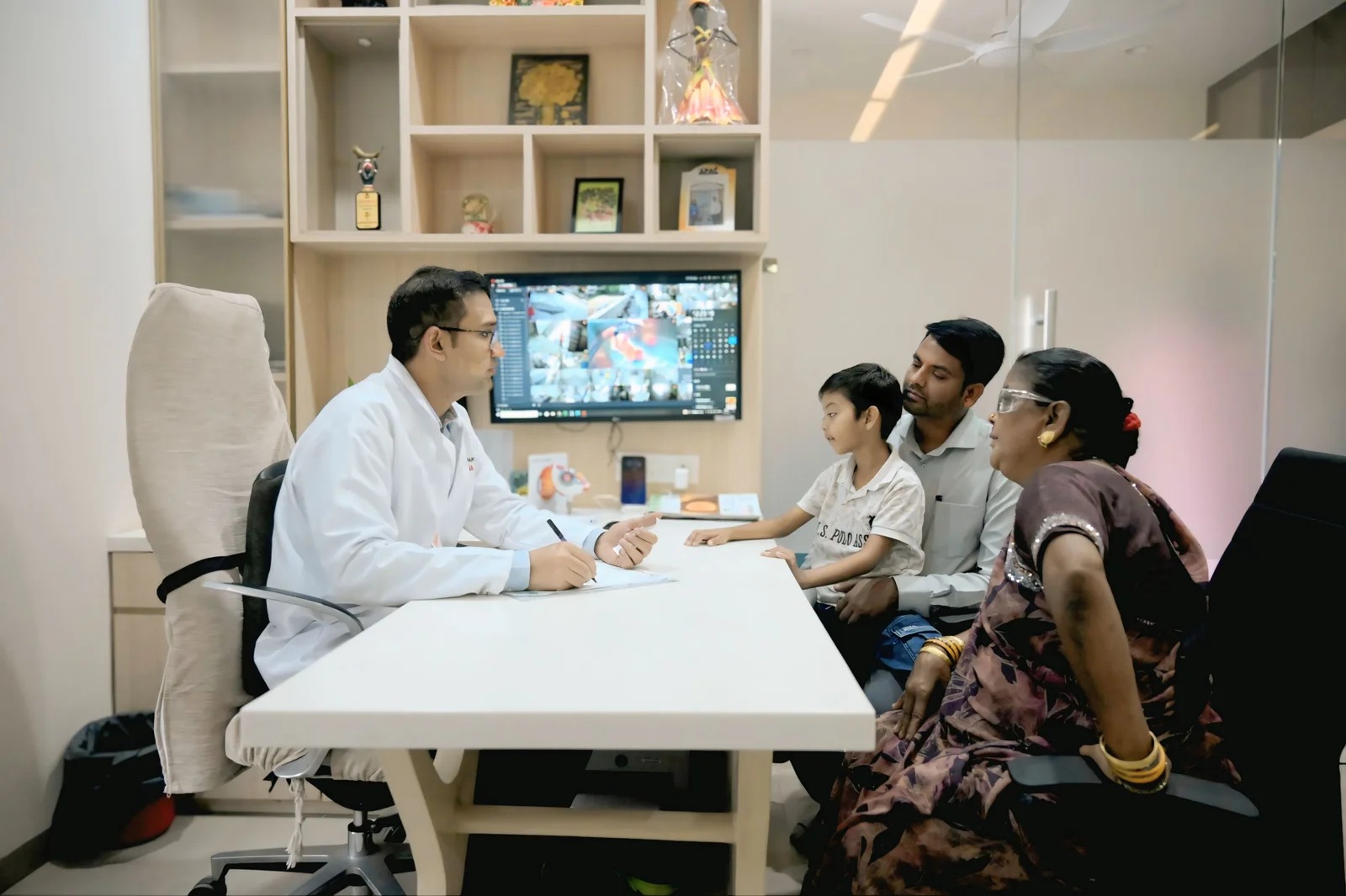
Almost every patient who is told they need an injection in the eye is afraid. That fear is understandable and it is also, in most cases, much bigger than the procedure. An anti-VEGF injection takes only a few minutes, the eye is numbed beforehand, and it is one of the most effective treatments in retina care. Here is exactly what to expect.
What is an anti-VEGF injection?
VEGF is a protein that makes retinal vessels leak and grow abnormally. Anti-VEGF medicines block it. Injected inside the eye, they dry up fluid at the macula and slow or stop abnormal vessels. Common medicines are bevacizumab, ranibizumab, aflibercept and faricimab.
Which conditions need them?
- Diabetic macular edema and diabetic retinopathy
- Wet age-related macular degeneration
- Swelling after retinal vein occlusion
- Choroidal neovascularisation, including in high myopia
- Retinopathy of prematurity, in selected babies, under specialist care
How the procedure is done
- The eye is numbed with drops, and sometimes a gel or small injection.
- The eyelids and surface are cleaned with antiseptic and the area is covered.
- A speculum holds the eyelids open so you do not need to keep them open yourself.
- The medicine is placed through a very fine needle at the white part of the eye, in a few seconds.
- The eye is checked and you go home the same day.
It is done in a sterile operation theatre or procedure room. Most patients feel pressure, a brief pinch or nothing at all.
How it feels afterwards
You may notice a gritty feeling, mild redness, a small blood spot on the white of the eye or a few floaters for a day or two. These are common and settle. Plan a short rest and avoid rubbing the eye.
How many injections will I need?
It depends on the disease and your response. Many patients start with a series of monthly injections, then spacing is increased guided by the OCT scan. Missing a visit can undo the benefit, so we plan the whole schedule with you at the start. Some patients also need laser alongside.
Risks, honestly
Serious problems are uncommon. They include infection inside the eye (endophthalmitis), a temporary rise in eye pressure, bleeding, retinal tear or detachment, and cataract. Strict sterile technique makes infection rare. Call the hospital the same day for increasing pain, worsening redness or a drop in vision after an injection.
Retina injection cost in Raipur
Average prices, per injection, in Raipur are in the ranges below. After doctor consultation, the prices may vary.
| Medicine | Average range |
|---|
| Bevacizumab | Rs 7,000 to Rs 12,000 |
| Ranibizumab | Rs 20,000 to Rs 30,000 |
| Aflibercept | Rs 40,000 to Rs 65,000 |
Cashless is available with 37 insurers and TPAs and 13 government schemes. See eye injection cost in Raipur and eye injection cost per injection.
Questions to ask your retina specialist
- Which medicine are you choosing and why?
- How many injections do you expect I will need?
- What happens if I miss one?
- What signs after an injection need a call to the hospital?
Worried about your eyes?Book a retina check-up at Shree Retina Care, Raipur. Cashless with 37 insurers and TPAs and 13 government schemes.
Call 93017 70138 Frequently asked questions
Is an eye injection painful?
The eye is numbed first. Most patients feel pressure, not pain.
Can I go home the same day?
Yes. It is a day-care procedure.
Will one injection be enough?
Usually not. Most conditions need a series, then follow-up scans decide the gap.
Keep reading
This article is general patient information and does not replace an eye examination. Written by the Shree Retina Care retina team, Raipur.