




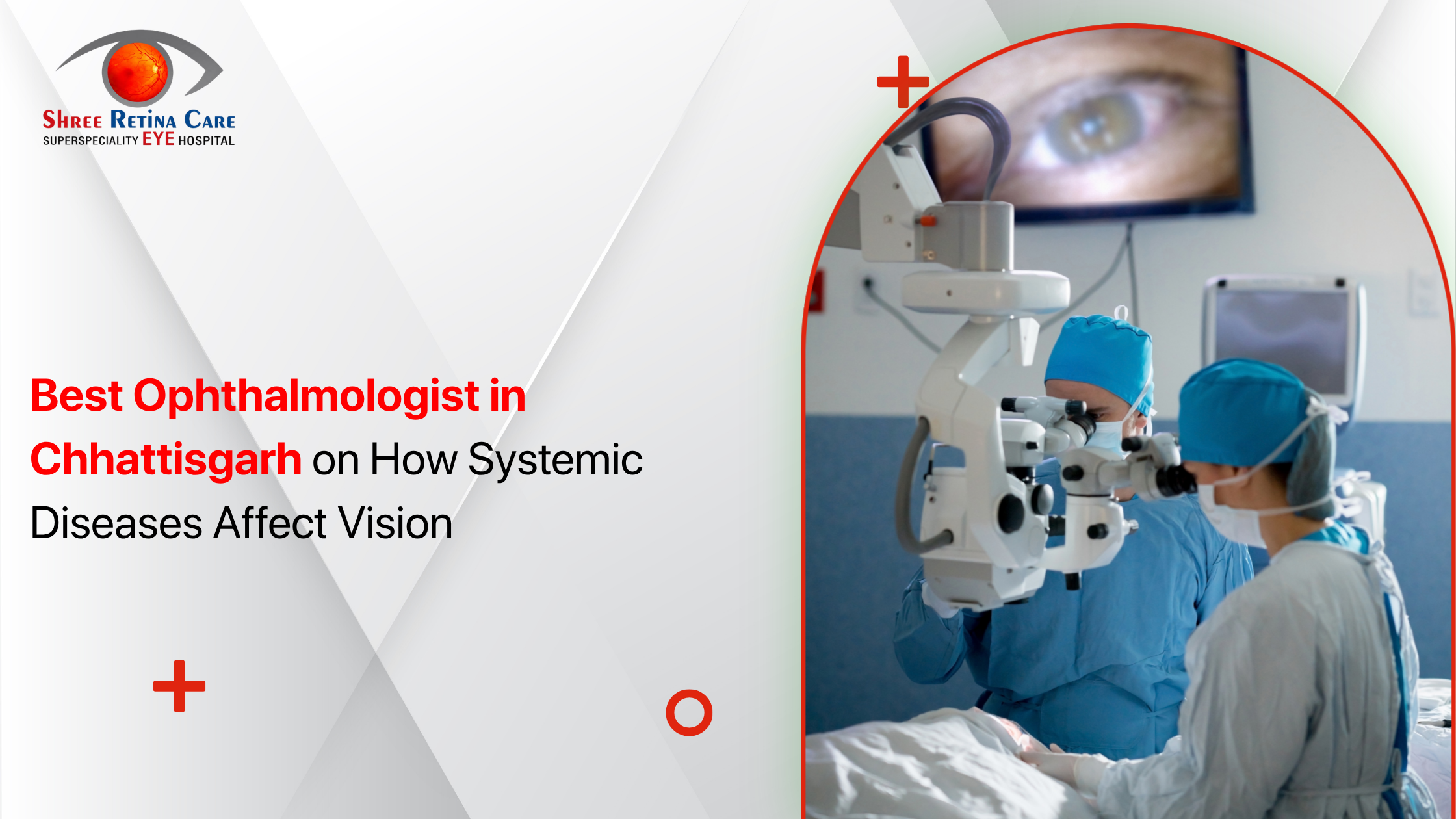
Best Ophthalmologist in Chhattisgarh on How Systemic Diseases Affect Vision
Introduction
Looking into someone’s eyes might reveal more than just emotion – they can show signs of deeper health issues. When illnesses spread through the body, not just one part, they often leave marks behind in how clearly you see. Diabetes, high blood pressure, problems with the thyroid, immune system flare-ups, along with elevated cholesterol levels – all these may shift what happens inside the eyeball long before anything else shows up elsewhere. Since sight trouble creeps in slowly when tied to whole-body illness, routine checkups with an eye specialist help catch red flags earlier. What lies beneath could be seen simply by peering closely.
Most folks don’t realize how much a skilled eye doctor can spot just by looking inside your eyes – things like diabetes or high blood pressure often show up there first. Getting checked at a clinic in Raipur means access to precise tools that catch serious issues before they worsen. When problems are caught early, treatment tends to work better, protecting both sight and general well-being. The right exam today might prevent bigger trouble tomorrow. For comprehensive eye evaluations and early detection of vision-threatening conditions, consult the Best ophthalmologist in Chhattisgarh.
What Are Systemic Diseases?
Looking into someone’s eyes might reveal more than just emotion – they can show signs of deeper health issues. When illnesses spread through the body, not just one part, they often leave marks behind in how clearly you see. Diabetes, high blood pressure, problems with the thyroid, immune system flare-ups, along with elevated cholesterol levels – all these may shift what happens inside the eyeball long before anything else shows up elsewhere. Since sight trouble creeps in slowly when tied to whole-body illness, routine checkups with an eye specialist help catch red flags earlier. What lies beneath could be seen simply by peering closely.
Most folks don’t realize how much a skilled eye doctor can spot just by looking inside your eyes – things like diabetes or high blood pressure often show up there first. Getting checked at a best clinic in Raipur means access to precise tools that catch serious issues before they worsen. When problems are caught early, treatment tends to work better, protecting both sight and general well-being. The right exam today might prevent bigger trouble tomorrow.
Diabetes and Vision Problems
Blindness you can avoid often ties back to diabetes. Tiny pipes inside your eye get harmed when sugar stays too high. That harm creates something doctors call diabetic retinopathy. At first, nothing feels wrong – no signs show up at all. As time goes on, eyesight turns hazy or shadowy without warning. Things like blurry sight or little black dots start popping into view. Vision might vanish fast, without clear reason.
Eye problems like cataracts or glaucoma often show up when diabetes is left unchecked. Over time, if blood sugar stays high, damage to the eyes becomes more likely.
Seeing a best eye doctor in Raipur often matters most when you have diabetes. Because spotting changes early means care can start before sight gets badly affected. Retina checks done right catch issues ahead of time. That way, serious damage stays avoidable.
High Blood Pressure and Eye Health
When blood pressure stays too high, it can harm tiny vessels feeding the eye’s retina. These changes often show up as narrowing or injury in the vessel walls. Blood flow shifts because of long-term strain on delicate tissues. Damage builds slowly when pressures remain unchecked over time.
Blurred sight might show up along with head pressure, less sharp eyesight, sometimes total sight vanishing fast if things get bad. Often it’s shifts in the back part of the eye – seen only when someone looks closely – that reveal high blood numbers have been sliding out of bounds.
Most times, a checkup at an eye clinic in Raipur catches retina problems sooner rather than later. This head start gives eye specialists and doctors room to step in before lasting issues take hold.
Thyroid Disorders and Their Effect on Vision
Eye problems often follow thyroid issues like Graves’ disease. Bulging eyes might show up alongside constant dryness. Tears could flood suddenly instead of staying balanced. Double vision sometimes interrupts clear sight. Redness lingers where it shouldn’t. Eyelids hesitate to shut fully, leaving gaps.
Eye muscle swelling might disrupt how eyes move, so tasks like reading or driving get harder. Vision could be at risk when serious thyroid eye issues go without care.
Seeing a skilled eye doctor in Raipur helps get a clear diagnosis while working together with hormone specialists, which supports better results. What matters is how well both doctors share insights during the process.
Autoimmune Diseases and Eye Complications
When the immune system turns on itself, it can harm normal body parts by accident. Rheumatoid arthritis, lupus, Sjögren’s syndrome – these often bring trouble to the eyes. Multiple sclerosis joins that list too, quietly influencing vision over time.
Eye discomfort can show up as dryness, swelling, or red tones. Trouble with bright lights might happen, along with hazy sight or aching. Certain immune system conditions trigger inner eye swelling – this condition goes by the name uveitis. Quick medical care becomes necessary when that occurs.
Eye checkups done often at Raipur’s best eye care center catch problems early, so care can start fast – stopping lasting harm from long-term swelling inside the eye.
High Cholesterol and Eye Changes
Cholesterol levels that stay too high aren’t just a concern for your heart. Vision might take a hit when fat builds up inside tiny vessels feeding the retina. Blood movement slows down, thanks to those blockages. Risk climbs for sudden vision issues like retinal artery blockage.
Yellowish patches near the eyes might show up in some people, called xanthelasma, often linked to higher cholesterol. These spots form slowly, appearing as soft lumps on the skin, usually without discomfort. When they appear, it could mean the body is struggling to manage fat properly. Not everyone with high cholesterol gets them, yet their presence sometimes signals deeper metabolic issues worth checking.
Eye checks in Raipur sometimes spot warning signals early, which leads to deeper health reviews along with changes in daily habits. Early detection through local screenings can shift how care unfolds later on.
Kidney Disease and Vision
Most people dealing with long-term kidney issues also face diabetes or high blood pressure – these two often travel together. When kidneys struggle, eyes can pay a price too. Trouble filtering waste might fuel swelling in the retina. Blood vessel harm from sugar shows up here just as it does elsewhere. Nerves tied to sight sometimes fray under the strain.
Fluid shifts during dialysis can cause short-term blurring of sight. Sometimes, eyesight wavers as body liquids adjust. Vision might dip when the body loses extra water. As levels stabilize, clarity often returns. Changes in eye function may follow fluid removal. When balance shifts, what you see could change briefly.
Eye checkups now and then at a best clinic in Raipur keep track of shifts over time. When spotted early, small issues grow less likely to worsen under steady treatment plans shaped by careful follow-up.
Neurological Disorders That Affect Vision
Eye problems can come from issues in the nervous system. When a stroke happens, it might lead to trouble seeing clearly. Multiple sclerosis sometimes brings blurred sight or double images. Brain growths interfere with how eyes move together. With Parkinson’s, tracking objects smoothly becomes hard. Vision gaps or blind spots show up in different ways across these illnesses.
Eye doctors often spot early signs of brain-related issues when checking the eyes closely. Sometimes it is during routine scans that hidden nerve problems become visible. A close look at the back of the eye can reveal changes linked to the central nervous system. Not always expected, yet common, these findings come up more than most assume. Through careful observation, subtle clues appear where least expected. What shows in the retina might point straight to the brain.
Should your eyesight shift without clear reason, turning to a skilled eye doctor in Raipur makes sense. A visit there often reveals what lies beneath odd visual shifts.
Why Routine Eye Checkups Are Essential
Most of the time, problems inside the body damage eyes before you notice anything. By the moment sight shifts, the injury has already settled in.
Most visits begin by testing what you can spot on the chart. Following that, doctors peek at the back of your eye after dropping something to open up the pupil. Fluid pressure sits next on the list, checked with a quick puff or touch. Near the end, attention turns toward the nerve linking your eye to the brain. When it’s time, advanced imaging shows up. Vision trouble can reveal itself early on this scan. Other hidden health clues pop into view too. What turns up shapes the steps that follow.
Yearly eye visits stand crucial if diabetes or high blood pressure are part of life. Thyroid problems? These too demand that the appointment be kept. When autoimmune disorders enter the picture, the advice holds firm. With kidney disease present, frequent checks become unavoidable. If someone close faced eyesight decline, stepping up care fits. Health history at home weighs heavily, often matching individual symptoms. Once you skip, it’s already too much – no matter the reason. Vision checkups hold firm, especially as dangers pile on one after another.
Lifestyle Habits That Protect Vision
Most days, taking steps adds up for eye health. Steady blood sugar does its part, similar to controlled blood pressure. Meals filled with bright vegetables feed the eyes well. Doctor checkups play a role, yet routine choices shape outcomes just as deeply. Over years, avoiding smoke keeps sight clearer. Simple movement, like stretches or walks, quietly supports function. Normal weight means less pressure on the small parts inside your eyes. When pills are used just as told, they do what they should – skipping doses gets in the way. What you eat matters more than most think.
Light that’s too intense might hurt your eyes, yet proper shades offer protection. Staring nonstop at displays risks discomfort later, although pauses make a difference. Hydration plays a role in keeping systems running, especially those tied to seeing clearly. Sleep arrives every evening, bringing renewal for thought and visual sharpness alike.
Most folks in Raipur get their eyes looked at regularly, which helps notice vision changes before they become serious. Thanks to these checkups happening early, medical help usually kicks in faster – leading to smoother recoveries. Quick detection ends up shaping outcomes later on.
Conclusion
Looking closely at the eyes often reveals signs of broader health issues. When diabetes goes unchecked, it may quietly harm sensitive parts inside the eye. High blood pressure does similar damage, sometimes without warning elsewhere in the body. Thyroid problems might show up through changes in how the eyes look or move. Autoimmune illnesses can trigger inflammation that targets visual tissues first. Kidney trouble links to swelling or bleeding within the retina early on. Even high cholesterol leaves traces visible during an exam. Nerve-related disorders also leave fingerprints behind what we see.
Seeing problems early makes it possible to save sight. A visit now and then to a solid best eye hospital in Raipur helps catch issues fast – especially when you talk to someone who knows eyes well around here. Care that feels steady, found at a reliable clinic across town, builds a strong base for long-term clarity. Checking things regularly, not waiting until something feels off, turns small moments into big wins. Scans done right, using tools that see what we cannot, uncover risks hiding beneath calm surfaces. Looking after the body often means looking after the eyes too – they move together, quietly shaping how clearly you experience days ahead.
