





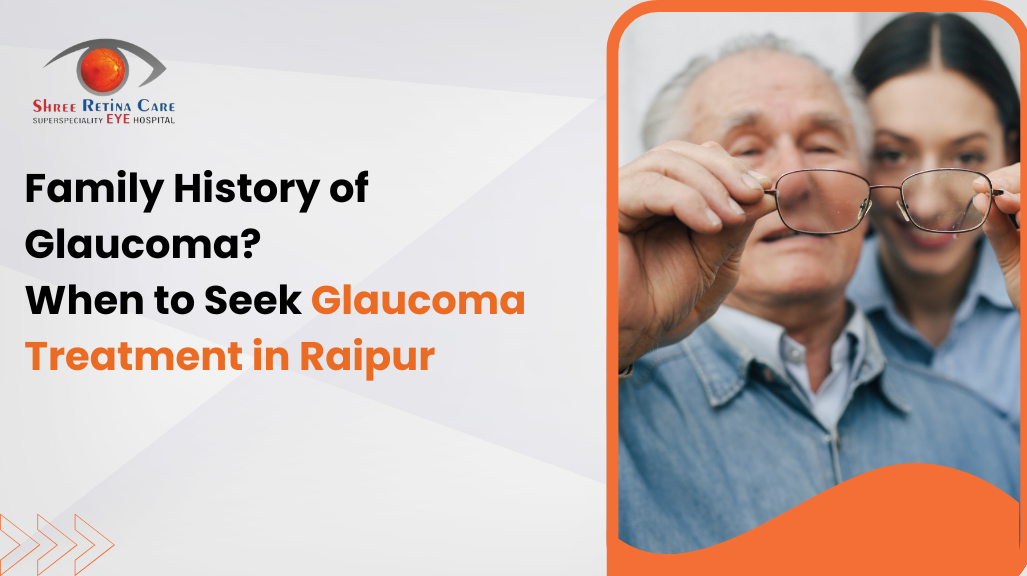
Family History of Glaucoma? When to Seek Glaucoma Treatment in Raipur
Maybe your mom said something while passing the peas – her eyesight isn’t what it used to be. Or perhaps an older relative once mumbled about losing vision due to “pressure.” A brother might have gotten word last month: glaucoma. If moments like those ring true, others know them too. Silence doesn’t mean it’s rare. Pay attention when stories repeat across meals.
Blindness from glaucoma spreads quietly around the world, while having relatives with it makes danger far greater. Still, in Raipur – just like much of India – few realize how close they might be to losing sight without warning. What hits hard is how still things seem at first; no pain, no red flags. Only when gaps appear in what you see does the damage show itself, yet by then, too much has faded forever.
If you’re reading this because your mom got diagnosed last week, that counts. So does waiting years before stepping into an exam room again. One moment changes how you see everything – especially when it hits home. Seeing blurry shapes at night? Maybe that’s why Dad keeps tripping. Fear creeps in quietly, yes. But so do answers. Doctors talk fast; words blur. You leave feeling more confused than when you walked in. Normal aging or something worse? Hard to tell without asking. Pressure builds where light enters. Quiet damage, day after day. Vision slips like sand through fingers. Not always sudden drops, but slow fade-outs. Kids notice parents missing details they used to catch. A name tag on a coat, street signs half a block away. It feels small until it isn’t. Shree Retina Care offers top glaucoma treatment in Raipur.
Understanding Glaucoma: The Silent Thief of Sight
Hidden danger moves silently through vision, attacking the link between seeing and understanding – the optic nerve. Often, excess fluid swells within the eye, pushing against fragile parts without signs. Still, certain people suffer damage despite normal pressure readings – overturning old medical assumptions. That uncertainty makes regular visits to an eye clinic in Raipur a quiet but powerful way to catch issues before they grow.
Most often, glaucoma slips in unnoticed. Some types move slowly, like primary open-angle, showing no signs until later. Pressure builds without noise here. Yet others strike quickly – angle-closure brings sharp rises that demand attention fast. Normal-tension type puzzles doctors; damage occurs despite average pressures. Injuries earlier in life can spark trouble years later. Secondary cases may follow other eye conditions, unfolding slowly behind the scenes.
At the far corners of vision, glaucoma begins its slow fade. Over the years, the brain quietly patches missing pieces, never raising an alarm. It takes narrowing paths, looming dark shapes, before loss becomes clear.
Why Family History Matters More Than You Think
A single parent or sibling with glaucoma can push your chances up sharply, four to ninefold over those without such a background. Far from just numbers on a chart, this leap matters in real medical decisions.
Your eyes might already be under strain without any signs showing up – genetics heavily influence glaucoma’s path. Some inherited genes tie directly to higher pressure inside the eye, sluggish fluid outflow, or a fragile optic nerve. Passed from parent to child, these factors linger unseen across family lines. A normal feeling now doesn’t rule out hidden damage; only an exam detects what lies beneath.
Here’s the upside: spotting glaucoma fast makes handling it much more doable. Eye drops might help, while some turn to laser treatments instead. Surgery also enters the picture when needed. All aim to ease pressure inside the eye. Shielding the optic nerve becomes possible this way. Timing shifts everything – early means better control.
Who Should Get Screened — and When?
Starting at age forty, get checked if someone in your family has glaucoma. Early visits help catch changes sooner. When relatives face eye pressure issues, timing matters more than waiting for symptoms. Seeing an eye specialist in Raipur around midlife makes sense for many in that situation. Don’t wait until vision shifts occur.
Eye checkup before forty? Start here. Normal outcome means waiting two or more years before the next look. A fresh visit happens only when time passes or signs shift.
Starting around age forty, checkups every year or two make sense – particularly when diabetes is part of your health picture. Blood pressure concerns add weight to that need. High nearsightedness does too. These factors together shift the balance toward more frequent visits. Age alone isn’t the only marker. What matters grows clearer with each added condition. Monitoring becomes less optional once several apply. Picture it like this: the body changes, signals multiply. Catching shifts early often depends on routine stops. Skipping them risks missing quiet warnings. Staying ahead means showing up before symptoms shout.
Yearly checkups matter most after sixty. Though health feels strong, surprises hide quietly. Each visit catches what silence hides. Staying ahead means showing up, always.
Out of the blue, if your vision blurs or halos form around lights, move quickly. Ringing in the eyes paired with sickness could signal a sudden rise in eye pressure. This isn’t something to sit on. Medical review is needed right away, regardless of age. Strange shifts like these never count as ordinary. When light bends strangely, nausea might follow. That uneasy feeling? It’s your body speaking – pay attention right then. A person from an African or Asian background could face greater chances, particularly when their cornea measures below the typical thickness. Another influence? Diabetes, which tends to increase susceptibility, especially when paired with extended use of steroids. Delicate corneal structure adds pressure without drawing attention, layering risks slowly. People using steroids regularly may find their likelihood climbing, little by little.
Warning Signs You Should Not Ignore
A few folks spot trouble only when it’s advanced. Trouble like blurry spots can show up later. Vision changes creep in slowly sometimes. Some see shadows near the edges first. Pressure behind the eyes grows without warning. Later on, everyday tasks get tricky. Lights may seem too bright out of nowhere. Seeing at night turns harder for many. Gaps appear in what you’re looking at. Eye strain comes more often than before.
– Side eyesight fades slowly over time
– Tunnel vision in advanced stages
Might spot blurry sight, sometimes rings of light – shows up extra often if it is an angle-closure type. Vision shifts without warning, tied closely to how the eye drains fluid. Rings appear especially when lights are bright, a clue that something inside has changed.
Red eyes might show up along with a headache. Sometimes sickness feels strong when it hits hard. A pounding head could come before queasiness takes hold.
Right away, see an eye specialist in Raipur if someone at home shows these signs. Skip waiting until the usual appointment. Certain types of glaucoma need fast care.
Glaucoma Treatment Options: What to Expect
A check of your vision might start with an eye doctor looking closely at how well you see. Sometimes, they examine the overall health of your eyes, too. One part could involve testing depth perception or color recognition. Light reactions are often measured during the appointment. The specialist may ask about past issues or family history. Tools like charts or bright lights help gather details. Each step adds clarity to what’s happening inside your eyes.
Tonometry- to measure intraocular pressure
Ophthalmoscopy – to examine the optic nerve
Picking up where the eyes can see at the edges? That test charts it out. Vision’s outer reaches get measured here. What lies beyond central sight shows up clearly. Mapping side vision happens through this method. Where you spot things without looking directly becomes obvious.
Examining the eye’s drainage angle happens through gonioscopy. This test checks how open or closed the space is where fluid leaves the eye. Looking at this area helps understand pressure inside the eyeball. The procedure uses a special lens after numbing drops go into the eye. Details of the angle structure become clear this way.
A scan using light waves gives a clear view of the optic nerve. This method captures fine details without needing surgery. Light-based imaging helps spot changes early. Seeing inside the eye becomes possible through this non-invasive technique. Structure shifts show up clearly with each picture taken. The process uses reflections to build images layer by layer. Clarity improves when examining delicate tissues.
Depending on results, care could include eyedrops – usually tried first – sometimes pills taken by mouth. Another option might be a laser method called SLT, or there’s surgery, for instance, trabeculectomy, if needed.
Stopping further harm marks the aim of every glaucoma therapy – bringing back what’s gone isn’t possible. That’s why spotting it early matters deeply, especially using **eye screening services in Raipur** available at qualified clinics across the city.
Taking Action: Eye Care in Raipur
These days, Raipur stands out as a key center for healthcare across central India, especially for treating glaucoma with modern tools. When your relatives have dealt with this eye issue, getting a routine eye checkup in Raipur soon becomes a top priority. Head to a reliable eye hospital in Raipur where experts handle such cases every day.
Start your search right by checking if the clinic has more than just standard eye charts. A place worth visiting will include tools that dig deeper into eye health. Instead of stopping at simple checkups, look for the best eye hospital in Raipur- one equipped for pressure tests and optic nerve scans. Expertise matters most when catching silent threats like glaucoma. The doctor should know how to read subtle signs, not just follow routines. Machines alone won’t help without sharp eyes behind them.
A visit to the right eye care clinic in Raipur isn’t only about getting glasses. Instead, it opens doors to experts focused on glaucoma, tools that spot issues early, and discussions of daily habits, while building a health path meant to last years.
Starting fresh at an **eye hospital in Raipur**? Share your family’s eye health past right away. That background shapes how your doctor chooses what to check first. Skip pretending small issues don’t matter – real concern begins when you speak up. A solid specialist treats your relatives’ conditions like clues worth following.
A Word on Prevention and Lifestyle
Even if glaucoma isn’t fully avoidable – particularly with family history involved – certain actions help lower chances of developing it while supporting long-term vision wellness.
Moving your body often helps ease eye pressure, studies confirm. Walking each day can make a difference without medication. Getting outside to stretch or walk lowers fluid buildup slowly. Even light workouts count when done week after week. Staying in motion keeps circulation steady and eyes less strained. Simple routines add up more than you might expect.
Besides vibrant veggies, meals with omega-3s do good things for your eyes. A mix of colorful produce brings natural helpers into play each day. Leafy types especially stick around, helping more than most notice. Protection shows up quietly through consistent choices at mealtime.
Using steroids for too long without a doctor’s supervision might increase pressure inside your eyes.
Start by shielding your eyes when danger is near. Bright sunlight? That needs blocking too. A sudden hit could harm – stop it before it happens. Rays from the sun sneak in slow; keep them out just the same. Safety starts where vision does.
– Do not skip checkups – even if you feel fine.
Silence marks the start of glaucoma. No pain arrives, no sudden fog fills your sight, plus warnings rarely show until harm takes hold. Yet when checkups happen on schedule – more crucial if others in your family faced it – spotting trouble early stays within reach. Years of clear eyesight can follow, simply by staying ahead.
Wait too long? Not wise. Just because sight seems okay does not mean problems are absent. A full exam at a trusted **eye care clinic in Raipur** could catch what you cannot see. Yesterday would have been ideal. Now comes second – seize it before small issues grow. Shree Retina Care provides top glaucoma treatment in Raipur.
